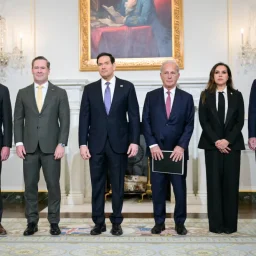


As the Strait of Hormuz becomes increasingly tense, diplomatic efforts between the United States and Iran are intensifying. With a critical deadline approaching and global energy markets watching closely, both nations are actively pursuing a second round of negotiations to avoid a complete breakdown of talks and prevent an even deeper crisis.
THE RACE FOR A SECOND NEGOTIATION
The United States and Iran are working quickly to schedule fresh peace discussions within the next few days. What makes this timeline particularly urgent is an impending April 7 deadline—the expiration of an earlier ceasefire agreement that both sides reached just days ago. According to informed sources, negotiators are considering multiple locations for the talks, with Pakistan emerging as the most likely venue. This would mirror the initial round of discussions that took place in Islamabad over the weekend, though other countries are also being evaluated as possible meeting grounds.
President Trump’s Recent Statements on Progress
During a Fox Business interview, President Donald Trump suggested that talks could restart “over the next two days” in Pakistan. He built his optimism on the foundation of an exhaustive but ultimately inconclusive negotiation session that unfolded Saturday evening in Islamabad. The president’s confidence that the war is “close to over” has fueled speculation about a potential breakthrough, though questions remain about the terms of any agreement.
When speaking with ABC News, Trump made clear that he is not considering an extension of the ceasefire beyond its April 22 expiration date. Instead, he expressed confidence in “an amazing two days ahead”—suggesting he believes a quick resolution is possible.
A Guarded Stance on Next Steps
However, the president remained noncommittal about America’s long-term commitment to securing a comprehensive deal with Iran. When asked whether the US would stay engaged in peace negotiations or simply withdraw military forces without a formal agreement, Trump left both options on the table.
“It could end either way, but I think a deal is preferable because then they can rebuild,” Trump explained. “They really do have a different regime now. No matter what, we took out the radicals.”
His comments suggest that while the Trump administration prefers a negotiated settlement—which would allow Iran to stabilize and recover—it is also prepared to accept an outcome where American military forces simply depart without a finalized peace agreement.
THE RISING TENSIONS AT HORMUZ
While diplomats work behind closed doors, the situation at the Strait of Hormuz continues to deteriorate. The United States is maintaining aggressive enforcement of a naval blockade designed to choke off Iran’s oil exports. This move has amplified concerns about the global energy crisis, which was already strained by the six-week conflict.
A Massive Naval Presence
To enforce the blockade around the clock, the US military has assembled a formidable fleet of more than 12 vessels. This armada includes:
- Multiple destroyers equipped with advanced weaponry
- The USS Tripoli, a large amphibious assault ship
- F-35 fighter jets providing air cover
- Marine boarding teams prepared for interdiction operations
- The USS Canberra, a littoral combat ship designed for mine-clearing operations
Strategic Positioning for Maximum Flexibility
Interestingly, these vessels are not concentrated directly off Iran’s coast or inside the narrow Strait of Hormuz itself. Instead, they are spread throughout the Gulf of Oman—a deliberate positioning choice, according to US military officials. This dispersed arrangement provides several tactical advantages: it creates more maneuvering space, allows for easier resupply operations, reduces exposure to Iranian anti-ship missiles, and enables boarding operations when necessary.
Impact on Commercial Shipping
The blockade is already affecting global trade. According to reporting from the Wall Street Journal, more than 20 commercial vessels that had no connection to Iranian ports have transited the Strait of Hormuz in just the past day. These ships are seeking to complete their journeys despite the heightened military presence and geopolitical uncertainty.
ECONOMIC CONSEQUENCES AND ENERGY POLICY SHIFTS
The Trump administration is taking steps to manage the economic fallout of the conflict, particularly regarding global oil markets. The Treasury Department announced that a waiver authorizing the purchase of certain Iranian crude oil will expire this coming weekend. A similar waiver for Russian crude oil had already lapsed the previous week.
These policy decisions reflect the administration’s broader effort to address the global energy shocks that have rippled through markets since the six-week war began. By allowing these waivers to expire, the administration may be attempting to signal resolve to Iran while also considering the broader economic impact on its allies and trading partners.
WHAT COMES NEXT?
The coming days will prove decisive for US-Iran relations. With a ceasefire set to expire on April 7, and the Trump administration’s stated confidence in rapid progress, the diplomatic window remains narrow. Success in Pakistan could lead to a broader peace settlement and allow both nations to step back from the brink. Failure could result in an escalation of military action and deepen the global energy crisis.
For now, both sides appear committed to talking, even as military posturing continues. Whether those talks can produce a genuine breakthrough before time runs out remains one of the most pressing questions facing the international community.