

A Papal Tour Overshadowed by Political Tensions
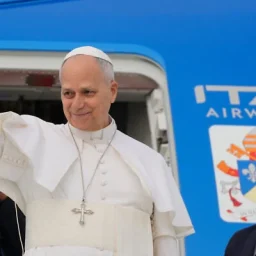
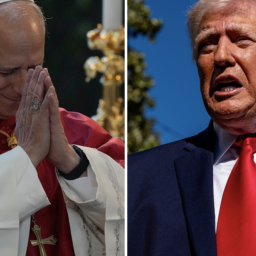
Pope Leo XIV has firmly stated that he has no interest in engaging in a public debate with U.S. President Donald Trump, even as tensions between the two leaders continue to make headlines. Speaking candidly during his ongoing 11-day tour across Africa, the pontiff made it clear that his mission is spiritual, not political.
The Chicago-born pope, whose historic visit to the African continent was meant to focus on faith, community, and encouragement for local Catholics, has instead found his trip repeatedly pulled into the orbit of political controversy. Much of that attention has come from President Trump himself, who has launched a series of pointed criticisms against Leo over the past week.
Pope Leo Sets the Record Straight
Speaking to reporters aboard the papal plane on Saturday, Pope Leo addressed swirling speculation that his recent remarks were aimed directly at Trump. He insisted that his words, delivered earlier in the week during a prayer meeting in Cameroon, were not meant as a rebuttal to the U.S. president.
“It looked like I was trying to debate the president, which is not my interest at all,” Leo explained, pushing back against headlines that framed his comments as a personal confrontation.
The pontiff clarified that the remarks in question, in which he lamented a world “ravaged by a handful of tyrants” and criticized global leaders for pouring billions into wars, had been drafted well in advance. According to Leo, the statement was written “weeks ago, well before the president ever commented on myself, and on the message of peace I am promoting.”
What Triggered the War of Words?
The friction between Pope Leo and President Trump appears to have been sparked largely by the pope’s vocal advocacy for peace with Iran. Leo has taken a firm stance on encouraging diplomacy and dialogue, a message that has not sat well with the Trump administration.
Just last Sunday, Trump unleashed a public rebuke of the pope, calling him:
- “WEAK on crime”
- “Terrible for Foreign Policy”
Speaking to NBC News at Joint Base Andrews in Maryland, Trump didn’t hold back, saying, “I don’t think he’s doing a very good job. He likes crime, I guess.”
These remarks set the tone for a week of back-and-forth tension that has largely played out in the media rather than directly between the two leaders.
Pope Leo’s Response: Peace Over Politics
Despite the criticism, Pope Leo has remained composed and resolute. Earlier in the week, during an interview with NBC News aboard the papal plane, he stated plainly that he has “no fear of the Trump administration.” He reaffirmed his commitment to continuing his appeals for peace, which he described as deeply rooted in the teachings of the Gospel.
“We are not politicians,” Leo said. “We don’t deal with foreign policy with the same perspective he might understand it, but I do believe in the message of the Gospel, as a peacemaker.”
His comments reflect a broader theme of his papacy so far, one centered on moral leadership, global compassion, and the Church’s role as a voice for the voiceless rather than a player in geopolitical chess.
Focusing on the African Mission
While the media spotlight has been intense, Pope Leo has emphasized that his presence in Africa is not about politics at all. His core purpose, he explained, is to connect with the faithful and strengthen the Catholic community across the continent.
“I am here to be with, to celebrate with, to encourage and accompany all of the Catholics throughout Africa,” he said.
The pope expressed mild frustration that the narrative surrounding his trip had been distorted, noting that a story “that has not been accurate in all of its aspects” had taken hold “because of the political situation created on the first day of the trip.” This was a clear reference to Trump’s sharp remarks that kicked off the week of controversy.
JD Vance Enters the Conversation
The dispute has also drawn in Vice President JD Vance, who converted to Catholicism in 2019 and has since become one of the more prominent Catholic voices in the Trump administration.
Speaking Tuesday at a Turning Point USA event, Vance offered what sounded like a cautionary message to the pope. He invoked the concept of “just war theory,” a centuries-old Christian doctrine that addresses when warfare can be morally justified.
“In the same way it’s important for the vice president of the United States to be careful when I talk about matters of public policy, I think it’s very, very important for the pope to be careful when he talks about matters of theology,” Vance said.
The comments added another layer to the already complex relationship between the Vatican and the White House, particularly on issues involving foreign policy and ethics.
A Broader Message: Why This Standoff Matters
This ongoing exchange between Pope Leo and the Trump administration highlights a larger, ongoing tension between religious leadership and political power. Popes have long spoken out on issues of war, peace, and human dignity, and Leo appears intent on continuing that tradition even when it draws criticism from powerful figures.
Some key takeaways from the situation include:
- Pope Leo is prioritizing his spiritual mission over engaging in political disputes.
- Trump’s criticism appears rooted in the pope’s call for peace with Iran.
- JD Vance’s involvement signals that the debate is also becoming a theological one, not just political.
- The Vatican’s message of peace continues to clash with the administration’s more hawkish foreign policy stance.
The Pope’s Unwavering Stance
Despite the noise, Pope Leo has made one thing abundantly clear: he intends to stay focused on his duties as a spiritual leader. He reiterated his vow to “promote peace in our world” and reminded reporters that his role is not to engage in political debate but to serve as a moral compass grounded in faith.
For Leo, the Gospel remains his guiding light. Whether the topic is war, poverty, or diplomacy, his approach leans on compassion and dialogue rather than confrontation. His refusal to be drawn into a direct war of words with the U.S. president may, in itself, be a powerful statement about the kind of leadership he hopes to model.
What’s Next for Pope Leo and the Vatican?
As his African tour continues, Pope Leo is expected to keep his focus on pastoral duties, including meetings with local Catholic communities, prayer gatherings, and public addresses. While political distractions may continue to follow him, those close to the Vatican suggest the pope is unlikely to shift his tone or message.
The question now is whether the Trump administration will continue its public criticism or allow the tension to cool. With Vice President Vance also wading into theological territory, the conversation may evolve from political sparring into a more substantive debate about the intersection of faith, ethics, and governance.
For now, Pope Leo seems content to let his actions and words speak for themselves, not in rebuttal to any world leader, but in service of a higher calling.
Final Thoughts
The recent exchanges between Pope Leo XIV and President Trump have captured global attention, but the pope’s response has been measured, graceful, and firm. By refusing to engage in a political debate, Leo is reinforcing the Vatican’s role as a moral voice rather than a political one. His focus remains on peace, faith, and the people he was elected to serve.
As the world watches this unfolding dynamic, one thing is certain: Pope Leo is determined to let the Gospel, not geopolitics, shape his legacy.