

INTRODUCTION
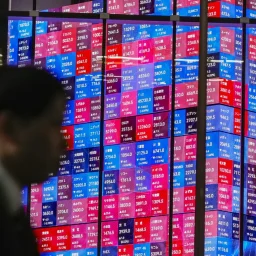
Global stock markets soared to unprecedented levels on Thursday as traders embraced growing optimism about a potential diplomatic resolution to Middle East tensions. The rally was fueled by hopes of a breakthrough agreement between the United States and Iran, coupled with strong corporate earnings and positive economic data from around the world. Major equity indices across Asia, Europe, and the United States all reached fresh record highs, signaling broad-based investor confidence despite ongoing geopolitical uncertainties.
THE GLOBAL RALLY
A Winning Streak Continues
The MSCI All-Country World Index, the broadest measure of global stock market performance, advanced 0.2% to mark its tenth consecutive day of gains and achieved a new all-time high. This remarkable winning streak reflects sustained investor optimism and a reduction in perceived risk across major markets worldwide.
Asia’s Strong Performance
Asian markets led the charge on Thursday, with the region’s major indices posting impressive gains. The MSCI index tracking Asia-Pacific shares outside Japan climbed 1.2%, positioning the benchmark for a third consecutive day of gains. Japan’s Nikkei 225 index surged 2.5%, marking another fresh record high. U.S. stock futures pointed modestly higher, with S&P 500 e-mini contracts gaining 0.2% in early trading.
IRAN PEACE HOPES DRIVE SENTIMENT
De-Escalation Expectations
The primary catalyst driving the market surge appears to be growing expectations that the United States and Iran may reach a diplomatic agreement to end their ongoing military conflict. The negotiations have taken on new urgency following announcements by President Donald Trump regarding talks between Israeli and Lebanese leaders, with Trump expressing confidence that the discussions would proceed on Thursday.
Market participants have fundamentally shifted their perspective on Middle Eastern conflict as an investment risk. Analysts at DBS in Singapore noted this significant change in investor behavior, writing that hopes are escalating for a potential U.S.-Iran deal in the coming days. They observed that market participants are no longer treating Middle East conflict as a stress point that warrants caution or risk reduction.
Analysts at DBS further questioned whether a U.S.-Iran deal or ceasefire extension might already be reflected in current stock prices, suggesting that market expectations may have gotten significantly ahead of official announcements or confirmed developments.
STRONG EARNINGS SEASON SUPPORTS RALLY
Bank and Financial Sector Performance
Wednesday’s market close set the stage for Thursday’s global rally, as the S&P 500 gained 0.8% and the Nasdaq Composite climbed 1.6%. These gains were fueled largely by robust quarterly earnings from major financial institutions. Bank of America and Morgan Stanley both reported strong quarterly results that exceeded analyst expectations, propelling the major indices to record highs.
Earnings Momentum Building
With approximately six percent of publicly traded companies having reported their quarterly results at the time of reporting, the early evidence suggests a strong earnings season is underway. An impressive eighty-four percent of companies that have reported earnings have beaten analyst expectations, a development that has supported the broader market rally.
This early strength in earnings season is particularly significant because it suggests that corporate profitability remains solid despite various economic headwinds and geopolitical concerns. The fact that companies are outpacing analyst expectations indicates that business conditions may be stronger than consensus expectations indicated.
Shifting Market Focus
Scott Rubner, head of equity and equity derivatives strategy at Citadel Securities in New York, noted that market focus is shifting toward fundamentals as earnings season progresses. He observed that the environment is becoming increasingly stock-driven and idiosyncratic rather than driven by broad macro themes. According to Rubner, this transition provides an attractive entry point for investors, particularly in large-cap quality growth stocks.
TECHNOLOGY AND SEMICONDUCTOR STRENGTH
TSMC’s Remarkable Performance
Taiwan Semiconductor Manufacturing Company, the critical supplier of advanced chips for the global artificial intelligence industry, reported a remarkable fifty-eight percent surge in quarterly profit on Thursday. The company’s stellar performance demonstrates that the insatiable global demand for AI-capable processors remains robust and undiminished.
TSMC’s strong results are particularly noteworthy because the company has largely shrugged off concerns about potential disruptions from Middle East conflicts. Energy prices remain a concern for some industries, but semiconductor demand for artificial intelligence applications appears sufficiently strong to overcome any energy-related headwinds.
AI-Driven Emerging Market Growth
Goldman Sachs analysts noted in a research report that emerging market stocks remain constructively positioned for gains. They attributed this optimistic outlook to strong underlying profit growth expected to be driven by artificial intelligence-related demand, which should remain relatively insulated from direct impacts of oil supply disruptions resulting from Middle East conflict.
OIL MARKETS NAVIGATE UNCERTAINTY
Stabilization Around $94 Per Barrel
Oil markets have remained relatively stable despite Middle East tensions, with Brent crude fluctuating between gains and losses throughout trading. At the time of reporting, Brent crude was down just 0.2% at $94.71 per barrel, reflecting a surprising resilience in pricing despite ongoing geopolitical risks.
Potential Iranian Concessions
Sources briefed by Tehran informed Reuters that Iran has offered proposals in ongoing negotiations with the United States that could include allowing ships to sail freely through the Omani side of the Strait of Hormuz without risk of attack. Such a concession would represent a significant de-escalation gesture and could substantially reduce concerns about oil supply disruptions in one of the world’s most critical maritime chokepoints.
Supply Concerns From Australia
Separately, a refinery fire in Australia added to supply concerns, potentially offsetting some of the pressure-relieving effects of potential Iranian concessions. The fire highlighted the ongoing vulnerability of global energy infrastructure to disruptions from various sources.
CURRENCY MARKETS REFLECT GEOPOLITICAL SHIFT
Dollar Weakness Continues
The U.S. dollar index, which measures the greenback’s strength against a basket of six major currencies, remained essentially flat at 98.00. However, the index is nursing a ninth consecutive day of declines as geopolitical worries have eased and traders have adjusted expectations regarding Federal Reserve monetary policy decisions.
Euro Strength
The euro gained ground, edging up toward its highest level since the war began. The currency reached $1.1823, extending a recent winning streak into a ninth consecutive day of gains. The euro’s strength reflects improving sentiment among investors regarding European assets and reduced geopolitical risk premiums.
Fed Independence Concerns
The currency market moves are occurring against a backdrop of unusual political pressure on the Federal Reserve. On Wednesday, President Donald Trump threatened to remove Federal Reserve Chair Jerome Powell from his position on the Fed’s Board of Governors if Powell does not voluntarily step down when his term as Federal Reserve Chair concludes on May 15.
This threat has intensified what analysts describe as a complicated standoff that threatens to disrupt the Federal Reserve’s usually smooth transition of power. The situation has renewed concerns among investors about the independence and stability of the nation’s central bank, though markets have apparently incorporated these concerns into current valuations.
CHINA AND ASIA ECONOMIC DATA
Strong Chinese Growth
Chinese shares advanced 0.8% after data revealed that Asia’s largest economy grew 5.0% in the first quarter compared with the year-earlier period, beating analyst expectations. This solid growth performance occurred as policymakers braced for potential negative impacts from Middle East conflict on supply chains and global trade.
Junyu Tan, regional economist for North Asia at Coface in Hong Kong, noted that the solid start to the year was supported by strong export performance, suggesting that the direct impact of Middle East conflict remains contained so far. However, Tan cautioned that the outlook is not uniformly positive, as persistent conflict could constrain the global export engine through weakening demand for Chinese goods.
Australian Employment Strength
Australian shares declined 0.4%, though the Australian dollar strengthened 0.3% to a four-year high of $0.71890. Employment data from Australia showed hiring rose in line with expectations during March, with companies adding more full-time workers while the jobless rate remained steady at 4.3%.
The employment figures will likely reinforce the Reserve Bank of Australia’s assessment that upside risks to inflation outweigh downside risks to labor market strength, potentially influencing future monetary policy decisions.
COMMODITIES AND CRYPTOCURRENCIES
Gold Rebounds
Gold recovered 0.8%, trading at $4,825.79 per ounce. The precious metal’s rebound likely reflects both a weaker dollar and continued investor demand for portfolio diversification amid geopolitical uncertainties.
Cryptocurrency Markets Mixed
In cryptocurrency markets, bitcoin climbed 0.3% to $75,084.56, while ethereum declined 0.2% to $2,359.89. The cryptocurrency market’s modest movements suggest that digital assets are taking a back seat to traditional equity and commodity markets in investor attention.
LOOKING AHEAD
The Sustainability Question
While Thursday’s rally reflects genuine optimism about potential diplomatic breakthroughs and strong corporate earnings, questions remain about whether these gains can be sustained. The market’s pricing of potential Iran peace deals suggests that significant positive news may already be reflected in current valuations.
As earnings season progresses and geopolitical negotiations continue, investors will be watching closely for any developments that might alter the current constructive sentiment. The next few weeks could prove critical in determining whether current record highs represent the beginning of a new bull market phase or a peak before consolidation.
CONCLUSION
Thursday’s global market rally represents a confluence of positive factors: diplomatic hopes in the Middle East, strong corporate earnings, solid economic data, and a reduction in geopolitical risk premiums. Whether this momentum can be sustained will depend on both the continued delivery of strong corporate earnings and progress toward actual diplomatic agreements rather than merely hopeful expectations. For now, global investors appear willing to bet that better times lie ahead for the world economy.