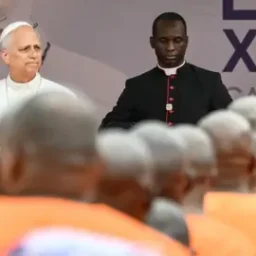


The Pope Leo XIV Cameroon visit has reached one of its most anticipated moments. As the first American pope in history makes his way through Africa, all eyes are now on the port city of Douala, where an estimated 600,000 people are expected to gather for what could be the largest Mass of his entire 11-day pastoral journey across the continent.
For many Cameroonians, this is a once-in-a-lifetime moment — and for the pope, it’s an opportunity to deliver a message of hope, courage, and reform to one of Africa’s youngest nations.
A Historic Africa Tour Reaches Its Halfway Point
Pope Leo XIV is currently on the fourth day of his 11-day tour across four African nations, marking a significant milestone as the first American pope to visit the continent. The Cameroon leg of the trip has already generated enormous public interest and international media attention.
On Friday, the pope travelled to Douala, Cameroon’s main port city, where he celebrated Mass and visited a local hospital. The Vatican confirmed that the Douala Mass is expected to draw the largest crowd of the entire tour — a remarkable turnout that speaks to both the spiritual hunger of the Cameroonian people and the deep Catholic roots in the nation.
Why Cameroon Matters
Catholics make up roughly 29% of Cameroon’s 29 million people, making the Church a significant cultural and spiritual force in the country. What makes the visit especially meaningful is the demographic reality of Cameroon itself:
- The median age in Cameroon is just 18 years old.
- More than half of the population is under the age of 25.
- The country is one of the youngest in the world.
This makes the pope’s message to young people not just relevant — but urgent.
A Message Focused on Youth
A major theme of the Pope Leo XIV Cameroon visit has been the future of the country’s young generation. Later on Friday, after returning to the capital Yaoundé, the pope was scheduled to meet with students, professors, and administrators at the Catholic University of Central Africa.
These types of gatherings have long been a signature moment in papal visits, particularly in developing nations. Past popes have used such encounters to motivate young people to remain hopeful despite facing poverty, corruption, limited opportunities, and other structural challenges.
Pope Leo XIV appears determined to continue that tradition — and to do so with directness.
Calling Out Corruption in a Bold Opening Speech
In his opening address earlier this week to Cameroon’s 93-year-old President Paul Biya — the world’s oldest sitting head of state — Pope Leo XIV did not mince words. He called for the “chains of corruption” in Cameroon to be broken and described the country’s young people as its future and greatest source of hope.
The moment was symbolic. Here stood the first American pope, speaking directly to a leader who has ruled since 1982, in a country where the generational gap between those in power and those hoping for change is perhaps the most dramatic on the continent.
A Warning About Youth Frustration
Pope Leo XIV also issued a serious warning about the social consequences of ignoring young people’s struggles. He noted that when unemployment and social exclusion persist, frustration can eventually lead to violence. His solution was clear: invest in education, training, and entrepreneurship for young people. In his view, this isn’t just a moral duty — it’s a strategic necessity for peace and stability.
The pope also pointed to a growing concern across Africa — the outflow of talented young people to Europe and North America, a problem that continues to weaken the continent’s development.
The Reality Behind the Numbers
On paper, Cameroon appears to have a healthy economy. According to World Bank data, the country’s unemployment rate stands at just 3.5%. But the deeper numbers reveal a much more troubling picture:
- About 57% of the labor force between 18 and 35 works in informal employment.
- Job security, benefits, and legal protections are largely absent for most young workers.
- Wages in the informal sector are often insufficient to support a family.
Despite being an oil-producing nation with modest economic growth, many Cameroonian youth feel the wealth never reaches them. Instead, they say, the benefits remain concentrated among political and business elites.
A Health Sector Under Pressure
One of the most visible consequences of economic stagnation is the ongoing brain drain in Cameroon’s health sector. The country is experiencing a steady loss of trained doctors and nurses, who leave for higher-paying positions abroad — mostly in Europe and North America.
The scale of the issue is significant. According to Cameroon’s Ministry of Higher Education, about one-third of all trained doctors who graduate from medical school in 2023 left the country shortly after completing their studies.
This has placed enormous pressure on an already understaffed health system, particularly in rural areas where medical care is often sparse. It is no coincidence that the pope included a hospital visit in his Douala schedule — a symbolic gesture in support of those still serving on the front lines of Cameroon’s healthcare needs.
Political Tensions Add to the Mood
The Pope Leo XIV Cameroon visit is also taking place during a politically sensitive period. Frustration over President Biya’s long rule reached a boiling point during the October presidential election, in which Biya secured his eighth consecutive term in office.
When main opposition candidate Issa Tchiroma Bakary challenged the results, deadly protests broke out across the country. The unrest highlighted growing impatience among ordinary Cameroonians — especially the youth — who are demanding change, accountability, and a voice in the country’s future.
The pope’s repeated focus on youth, corruption, and opportunity is therefore not happening in a vacuum. It comes at a moment when many Cameroonians are asking hard questions about what kind of country they want to leave for the next generation.
Why This Visit Matters Beyond Cameroon
The Pope Leo XIV Cameroon visit isn’t just a local story. It carries weight across the entire African continent for several reasons:
- It reinforces the Catholic Church’s growing focus on Africa, where the faith is expanding faster than anywhere else in the world.
- It signals that the Vatican is willing to confront uncomfortable political realities, including corruption and long-term authoritarianism.
- It elevates the voices of young Africans, who are often sidelined in political conversations.
- It strengthens the symbolic bond between the Global South and a pope who, though American, is clearly prioritizing regions often overlooked by his predecessors.
For millions of African Catholics, seeing the pope on their soil is more than a religious occasion. It’s a moment of global recognition.
Looking Ahead
As Pope Leo XIV continues his journey through Africa, more moving images are expected — from open-air Masses attended by hundreds of thousands, to intimate visits with hospital patients, to frank conversations with political leaders.
But if the first half of the tour is any indication, the central message will remain consistent: Africa’s youth matter, corruption must end, and the future belongs to those willing to build something better.
For Cameroon, a country standing at the crossroads of old leadership and new aspirations, the pope’s words may not bring immediate change — but they have certainly struck a powerful chord.