

The Pontiff’s Response
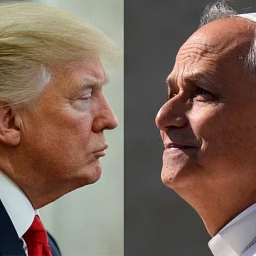
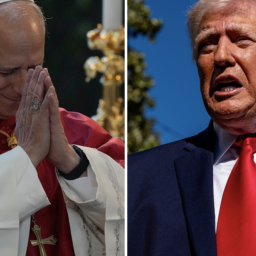
Pope Leo has declared his unwavering commitment to speaking against war and promoting peace, directly addressing criticism from US President Donald Trump. The pontiff made these remarks while traveling aboard the papal aircraft en route to Algiers, where he is beginning an extensive ten-day tour across four African nations.
The Pope, who holds the distinction of being the first American-born leader of the 1.4-billion-member Catholic Church, refused to be drawn into a direct confrontation with the American president. Instead, he reframed the debate around broader principles and values.
A Message Being Misused
During his comments to Reuters, Pope Leo expressed concern about how religious teachings are being weaponized and distorted for political purposes. He articulated frustration with those who claim Christian authority while advancing agendas that contradict Gospel principles.
“I don’t want to get into a debate with him,” the Pope stated diplomatically. “I don’t think that the message of the Gospel is meant to be abused in the way that some people are doing.”
His comment suggested that he views certain political uses of Christianity as fundamentally contrary to authentic religious teaching.
An Uncompromising Stand on Peace
Despite the criticism directed at him, the Pope made clear that his position on war and conflict resolution remains immovable. He outlined his commitment in unambiguous terms.
“I will continue to speak out loudly against war, looking to promote peace, promoting dialogue and multilateral relationships among the states to look for just solutions to problems,” he declared.
The pontiff’s statement reflects the Catholic Church’s traditional opposition to military conflict and its advocacy for diplomatic solutions to international disputes.
The Human Cost of Conflict
Pope Leo grounded his position in the immediate suffering caused by ongoing wars and violence worldwide. His concern was deeply humanitarian rather than purely ideological.
“Too many people are suffering in the world today,” he emphasized. “Too many innocent people are being killed. And I think someone has to stand up and say there’s a better way.”
His words underscored the moral imperative he feels to speak on behalf of those affected by conflict, regardless of political pressure or criticism from world leaders.
A Tour Focused on Peace
The Pope’s African tour serves as a practical expression of his commitment to dialogue and peace-building. By visiting four African nations over ten days, he is engaging directly with communities, many of which have experienced the devastating impacts of war and instability.
This trip demonstrates that Pope Leo is not merely offering abstract pronouncements about peace from the Vatican, but actively traveling to regions affected by conflict to offer moral support and advocate for solutions.
Broader Implications
The exchange between Pope Leo and President Trump highlights the ongoing tension between religious institutions and political power. The Pope’s refusal to be silenced or intimidated by presidential criticism affirms the Church’s independence as a moral voice in global affairs.
His determination to continue speaking against war despite direct attacks from the world’s most powerful nation underscores the Church’s commitment to principles it considers non-negotiable, regardless of political consequences or diplomatic friction.