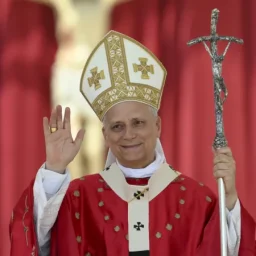


Pope Leo Equatorial Guinea Visit Ends With Strong Human Rights Message
Pope Leo has wrapped up his four-nation African tour with one of its most pointed moments yet. During his final stop in Equatorial Guinea, the pontiff didn’t hold back when addressing the country’s troubled prison system, urging authorities to focus on rehabilitation and human dignity rather than simple punishment.
The Pope Leo Equatorial Guinea visit took on particular significance given the country’s well-documented human rights issues and the oil-rich nation’s stark wealth inequality. His willingness to speak frankly about these challenges has become a defining feature of his approach to pastoral leadership across the continent.
A Powerful Message Inside Prison Walls
The pontiff visited a prison in Bata that has earned a grim reputation among international human rights organizations. Speaking to hundreds of inmates gathered in the prison courtyard, Pope Leo delivered a message that resonated well beyond the facility’s walls.
He emphasized that true justice seeks not simply to punish but to help rebuild the lives of victims, offenders, and communities. For justice to be effective, he argued, it must always promote the dignity of every person. That’s a profound statement to make inside a facility that rights groups have specifically criticized for failing that standard.
The Pope urged the inmates not to despair and reminded them they weren’t alone. He told them their families love them and are waiting for them, and that many people outside the prison walls were praying for them. These were personal, pastoral words rather than diplomatic niceties.
The Moment That Broke Through
Something genuinely moving happened as the Pope prepared to leave. The prisoners, who had been standing in the rain throughout the visit, began shouting a single word as he departed.
Freedom.
That spontaneous cry captured something powerful about the encounter. These weren’t just inmates performing for cameras. They were human beings expressing a fundamental longing that the Pope’s presence had acknowledged. It was the kind of moment that makes papal visits to difficult places genuinely meaningful rather than merely symbolic.
The Bata Prison’s Troubling Reputation
The location of the Pope’s visit wasn’t chosen randomly. The Bata prison has become a focal point for human rights concerns in Equatorial Guinea for very specific reasons.
Here’s what human rights organizations have documented about the facility:
- Used to detain political opponents of the government
- Inmates reportedly beaten routinely as punishment
- Many prisoners have disappeared without trace
- Families often don’t know if their loved ones are alive or dead
- Basic hygienic and sanitary conditions described as troubling
Amnesty International has been particularly outspoken about conditions at the prison. The organization’s reporting paints a picture that contradicts official government statements about humane treatment.
Government Pushback
Equatorial Guinea’s Justice Minister Reginaldo Biyogo Ndong has offered a different narrative. He insists detainees are treated fairly and that the government remains committed to protecting human rights. That’s the official position, but it’s difficult to reconcile with the extensive documentation from international monitors.
This gap between official statements and documented reality is one reason the Pope Leo Equatorial Guinea visit carried such weight. When the Pope speaks directly about issues in a country, it becomes harder for authorities to dismiss concerns as Western interference or biased reporting.
Beyond the Prison Visit
The Pope’s day included several other significant moments beyond the prison stop. After meeting with the inmates, he visited a memorial for victims of a devastating 2021 explosion at a military base. That tragedy killed over 100 people and injured 600 others, leaving lasting scars on the community.
Following the memorial visit, Pope Leo addressed locals at the Bata stadium. His message there continued the themes of his entire tour, emphasizing respect for the rights of every citizen, every family, and every social group. It was a direct challenge to how authorities in Equatorial Guinea approach governance.
A Mass With the Long-Serving President in Attendance
Earlier in the visit, Pope Leo had celebrated Mass drawing approximately 100,000 people at the Basilica of the Immaculate Conception in Mongomo. Among those attending was Teodoro Obiang Nguema Mbasogo, the country’s leader and the world’s longest-serving president.
That’s an important detail. Obiang has ruled Equatorial Guinea since 1979, making him a remarkable figure in global politics. The Pope’s willingness to deliver pointed messages about governance and human rights in his presence demonstrated both personal courage and strategic calculation.
Words Aimed at Those in Power
During the Mass, Pope Leo didn’t soften his message just because the president was in attendance. He urged Equatoguineans to serve the common good rather than private interests, specifically calling for bridging the gap between privileged and disadvantaged citizens.
His remarks about the country’s natural resources were particularly sharp. He acknowledged that the Creator has endowed Equatorial Guinea with great natural wealth, but urged the people to work together so that wealth could be a blessing for everyone. The implicit critique of current resource distribution was unmistakable.
The Pope warned that the country’s future depends on the choices its people make. That’s a call for change delivered in the presence of a leader who has maintained power for over four decades.
The Wealth Inequality Problem
Equatorial Guinea presents one of the world’s most striking examples of wealth inequality. The country is genuinely oil-rich, with petroleum revenues that should theoretically provide for all its citizens. Reality looks very different.
Consider the contrast:
- More than half of Equatoguineans live in poverty
- The country ranks among the world’s most corrupt states per Transparency International
- Oil revenues have reportedly benefited elite families disproportionately
- Basic services remain inadequate despite national wealth
- Infrastructure development has been uneven at best
The World Bank’s poverty data and corruption perception indices tell a story that stands in sharp contrast to the country’s theoretical wealth per capita. Something has gone seriously wrong with how resources get distributed.
A Notable French Court Case
One of the more revealing incidents involving Equatorial Guinea’s ruling family occurred in France. The president’s son, who also serves as the country’s vice-president, was fined by a French court in 2020.
The case involved using public money to fund a luxurious lifestyle in France. His French assets have since been seized as part of the legal proceedings. That kind of high-profile corruption case involving close family members of the head of state illustrates exactly the dynamics Pope Leo was implicitly criticizing.
The Obiang government denies corruption allegations and claims oil revenues are being used appropriately. International observers and European courts have reached different conclusions.
Political Freedom Concerns
Political opposition in Equatorial Guinea faces severe restrictions that would be unusual in most democratic societies. The environment for dissent is extraordinarily constrained.
Some of the challenges opposition figures face include:
- Virtually no tolerance for political opposition
- Absence of a free press limiting public discourse
- All broadcast media owned or controlled by government or allies
- Restrictions on assembly and association
- Legal system often used against perceived opponents
When Pope Leo called for greater room for freedom and safeguarding human dignity, he was addressing these very real limitations that shape daily life for millions of Equatoguineans.
The Private Meeting With Obiang
Adding another layer of complexity to the visit, President Obiang held a private meeting with the Pope on Tuesday. What exactly was discussed in that meeting remains private, but the dynamics are fascinating.
Obiang is 83 years old and has been in power since 1979. He represents a political tradition that predates many current geopolitical realities. For a Pope known for speaking frankly about authoritarianism and human rights to sit down privately with such a long-serving leader carries significant symbolic weight.
The Broader Africa Tour
The Pope Leo Equatorial Guinea visit was the culmination of a broader four-nation Africa tour that took him through Algeria, Cameroon, Angola, and finally Equatorial Guinea. Throughout the journey, the pontiff has spoken with unusual directness about difficult topics.
Some of the major themes he’s addressed include:
- Criticism of tyrants spending billions on wars while people suffer
- Condemnation of what he called the colonisation of Africa’s mineral resources
- Emphasis on human dignity and rights across different contexts
- Calls for better governance and reduced corruption
- Focus on poverty alleviation and wealth distribution
This willingness to engage with contentious issues has distinguished Pope Leo’s approach from more diplomatic papal tours of earlier decades. He’s chosen engagement over reticence, even when that engagement generates controversy.
The Fastest-Growing Catholic Region
One reason Africa matters so much to the current pontificate is demographic. The continent represents the fastest-growing Catholic region in the world. Understanding and engaging with African Catholics has become essential for the Church’s future.
Pope Leo has clearly prioritized this reality. His tour wasn’t just about visiting Catholic communities. It was about engaging substantively with the political, economic, and social realities shaping those communities. That’s a different approach from tours focused purely on religious matters.
The Trump Connection
Interestingly, Pope Leo’s African tour has played out against a backdrop of broader geopolitical tensions. Shortly before embarking on the trip, he criticized Donald Trump for threatening Iran. The US president responded by calling the pontiff bad for foreign policy.
That public exchange underscores something important about Pope Leo’s leadership style. He’s willing to speak out on global issues even when that generates pushback from powerful figures. This willingness carried through his entire African tour, where he consistently prioritized moral clarity over diplomatic smoothness.
Thoughts for Society’s Most Vulnerable
During Wednesday’s Mass, Pope Leo made explicit reference to those most affected by Equatorial Guinea’s problems. His thoughts, he said, went to the poorest, to families experiencing difficulty, and to prisoners often forced to live in troubling hygienic and sanitary conditions.
That list is significant. The Pope didn’t just speak in abstract terms about human dignity. He specifically identified the people whose dignity most needed protection in the country he was visiting. This kind of specificity makes it much harder for authorities to deflect criticism or claim the concerns are generic.
What the Visit Accomplished
Assessing the practical impact of papal visits is always tricky. Immediate policy changes rarely follow such trips. However, the Pope Leo Equatorial Guinea visit has likely achieved several important outcomes.
The visit has internationalized attention on Equatorial Guinea’s human rights situation. It has provided hope and recognition to people suffering under difficult conditions. It has created a historical record of papal engagement with these issues. And it has potentially opened space for future civil society advocacy.
Whether any of that translates into meaningful change depends on many factors beyond papal control. But raising issues forcefully is a necessary first step toward addressing them.
The Final Mass in Malabo
Pope Leo is scheduled to celebrate Mass at a stadium in the capital Malabo on Thursday morning to officially conclude his tour. That final public event will cap a visit that has demonstrated how a modern pontificate can engage with political and human rights issues while maintaining its primary religious mission.
The Mass will likely draw massive crowds, as his previous events during this trip have done. These gatherings represent more than religious observance. They’re opportunities for Equatoguineans to demonstrate their faith publicly in a context where the Pope has validated their concerns about governance and justice.
Looking Back at the Tour
The four-nation African tour will be analyzed and discussed for months to come. Pope Leo has established himself as a pontiff willing to engage with political and economic issues even when that engagement is uncomfortable.
Throughout the trip, he addressed poverty, corruption, war, resource extraction, human rights abuses, and political freedoms. He did so in countries where these issues are genuinely sensitive and where diplomatic silence might have been the easier path.
The Pope Leo Equatorial Guinea portion of the tour represented perhaps the most pointed example of this approach. Speaking directly about prison conditions while visiting the prison itself sent a message that couldn’t be ignored or reinterpreted.
A Voice for the Voiceless
What made this tour particularly significant was the Pope’s apparent commitment to being a voice for those who lack voices of their own. Prisoners in Bata don’t have access to international media. Poor families in rural Equatorial Guinea don’t get their concerns heard by world leaders. Political opposition figures operate under severe restrictions.
By addressing these constituencies directly and acknowledging their situations publicly, Pope Leo has done something valuable regardless of specific policy outcomes. He has reminded them and reminded the world that their lives matter and their circumstances deserve attention.
The Lasting Impact
Papal visits sometimes fade quickly from memory. This one might prove more durable because of the pointed nature of the Pope’s messages and the specific issues he addressed. Human rights organizations will likely reference his statements when advocating for change. Journalists covering Equatorial Guinea will have new material for their reporting. Ordinary citizens will remember that the Pope acknowledged their reality.
For a country that has long operated outside the most intense international spotlight, these dynamics represent a shift. The Pope Leo Equatorial Guinea visit has ensured that discussions about the country will include his powerful criticisms for years to come.
As Pope Leo concludes his African tour and returns to Rome, he leaves behind a continent where his words will continue to echo. Whether they lead to concrete changes depends on countless other actors. But the Pope has done his part by speaking truthfully about difficult situations. That alone is an achievement worth acknowledging.