

The Strait of Hormuz is once again at the center of a high-stakes diplomatic standoff, with Iran pushing back hard against U.S. claims that the vital waterway remains open to international shipping. In a dramatic contradiction that unfolded across social media and political stages on Friday, Iranian officials signaled they could shut down the strait at any moment, directly challenging statements made by President Donald Trump just hours earlier.
Iran’s Parliament Speaker Issues Stark Warning
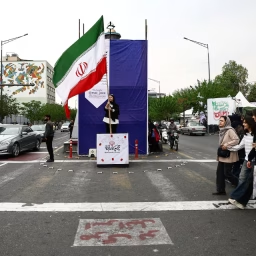
Mohammad-Bagher Qalibaf, the speaker of Iran’s Parliament, made it clear that the Strait of Hormuz will not stay open if the United States continues its blockade of Iranian ports. In a pointed message posted on the social platform X, Qalibaf declared that passage through the strait would only be permitted through a “designated route” and would require explicit Iranian authorization.
His message was direct and defiant. He emphasized that the real situation on the ground, not online announcements, would determine the strait’s status. According to him, whether the waterway remains open or closed will be decided through action, not through posts on social media.
This is a significant shift in tone and suggests that Tehran intends to assert control over one of the world’s most strategically important maritime corridors, regardless of how Washington frames the situation publicly.
Trump’s Conflicting Announcement in Arizona
The timing of Qalibaf’s warning was no accident. As he posted his statement, President Trump was addressing a Turning Point USA event in Phoenix, Arizona. Earlier that same day, Trump had publicly announced that Iran had declared the Strait of Hormuz “open for business,” while also confirming that the U.S. blockade would continue.
Trump’s announcement appeared to follow a statement from Iran’s Foreign Minister, Abbas Araghchi, who had said the strait would remain open to all commercial vessels for the duration of the current ceasefire. For a brief moment, it looked like tensions might be easing.
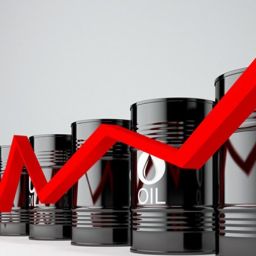
Financial markets responded almost immediately. Stocks rallied on the news, and oil prices tumbled by roughly 12 percent as traders anticipated stable energy flows through one of the world’s busiest shipping lanes.
Confusion Inside Iran Over Mixed Signals
Not everyone in Iran was on the same page, however. Fars News Agency, a state-linked Iranian outlet, openly questioned the foreign minister’s statement. The agency described Araghchi’s post as an unexpected declaration about the strait’s liberation and suggested that Trump’s subsequent comments had created confusion within Iranian society.
This internal disagreement highlights the complex dynamics inside Iran’s government, where different factions often send conflicting messages during periods of heightened tension. The gap between the foreign ministry’s conciliatory tone and the parliament speaker’s defiant posture reflects real divisions over how to handle the ongoing conflict with the United States.
A War Fought on Social Media
One of the most striking aspects of this current crisis is how much of it is playing out online. Since the conflict escalated, officials from both the U.S. and Iran have taken their messaging directly to social media platforms, bypassing traditional diplomatic channels entirely.
The back-and-forth has included:
- Major policy announcements posted on X and Truth Social
- AI-generated memes used to mock opposing leaders
- Rapid-fire responses that often contradict official statements from hours earlier
- Real-time reactions that influence global markets within minutes
Qalibaf himself acknowledged this reality, noting that media warfare and the shaping of public opinion have become critical components of modern conflict. He insisted, however, that Iran would not be swayed by what he called psychological tricks.
Why the Strait of Hormuz Matters So Much
For readers unfamiliar with the geography, the Strait of Hormuz is a narrow waterway connecting the Persian Gulf to the Arabian Sea and the Indian Ocean beyond. It is one of the most important shipping chokepoints on Earth.
Roughly one-fifth of the world’s oil supply passes through this strait every single day. Any disruption, even a temporary one, sends shockwaves through global energy markets and can drive fuel prices up sharply in countries thousands of miles away. For major oil importers like India, China, Japan, and South Korea, the strait is absolutely essential to their energy security.
When Iran threatens to close or restrict the Strait of Hormuz, it is not just a regional matter. It is a global economic concern that affects everything from gasoline prices to airline ticket costs to the stability of emerging economies.
Trump’s Claims About Iran’s Nuclear Program
Beyond the shipping dispute, Trump made several additional claims during his media blitz on Friday. Speaking by phone with Bloomberg, he said Iran had agreed to an unlimited suspension of its nuclear program. So far, Iranian officials have not confirmed or publicly commented on this particular claim.
Trump also posted on Truth Social that Iran had agreed to hand over what he called its “nuclear dust,” which appears to be a reference to the country’s stockpile of enriched uranium. These statements are significant if accurate, but the lack of Iranian confirmation leaves serious questions about what has actually been agreed upon.
Additionally, Trump declared that Israel would stop bombing Lebanon, saying that enough was enough. Whether this represents a formal understanding between Washington and Tel Aviv or simply the president’s personal position is not yet clear.
The Broader Diplomatic Picture
What emerges from this confusing series of announcements is a picture of two governments trying to shape public perception as much as they are trying to resolve the underlying conflict. Each side is racing to claim diplomatic victories while their actual positions on the ground appear to be more rigid than their public statements suggest.
The White House has been contacted for additional comment on the situation, and observers around the world are watching closely to see whether the next move comes through official diplomatic channels or through another round of social media posts.
What This Means for Global Markets
Investors and energy traders are now facing significant uncertainty. The initial rally in stocks and the drop in oil prices came from the assumption that the strait would remain open and functional. If Iran follows through on its threat to close or restrict access, those market gains could evaporate quickly.
Energy analysts are watching several key indicators:
- Tanker traffic through the strait over the coming days
- Any physical actions by Iran’s Revolutionary Guard Corps navy
- Insurance rates for vessels traveling through the region
- Statements from other Gulf states about shipping safety
Even a short-term closure or slowdown could push oil prices back above their recent highs and trigger inflation concerns in major economies.
Looking Ahead
For now, the situation remains fluid and highly unpredictable. The gap between what is said online and what actually happens in the waters of the Persian Gulf will determine whether this crisis escalates further or finds some path toward resolution.
Qalibaf’s warning makes one thing clear: Iran is not prepared to accept the U.S. blockade quietly, and it views the Strait of Hormuz as leverage it is willing to use. Whether Washington backs down, escalates further, or finds a face-saving compromise will likely shape not just the immediate crisis but the broader trajectory of U.S.-Iran relations for years to come.
In the meantime, the world watches a conflict being narrated in real time across social media feeds, where every post has the potential to move markets, spark panic, or change the course of a war.